


Formula 1 has come a long way from being a sport followed by die-hard racing fans. Today, it’s just as likely to spark conversations about fashion, travel, or pop culture as it is about what’s happening on the track.
We spoke with Ivonne Malagon Arreola, Manager, Social Marketing & Strategy, and a few themes came up in our conversations:
Formula 1 is as much about storytelling as it is about racing.
The fandom lives across platforms, with each serving a different role.
Authenticity matters. Fans can quickly tell when brands don’t understand the culture.
What makes Formula 1 particularly interesting is how much happens between race weekends. Fans follow driver rivalries, team drama, paddock style, memes, podcasts, and social content with the same enthusiasm they bring to the races.
The result is a fandom that’s active year-round and increasingly shaping conversations far beyond motorsport. As brands continue to invest in the space, it’s important to understand what actually resonates with fans.
Read on for Ivonne’s perspective on the Formula 1 fandom, from what drew her to the sport to how she sees the community evolving today and what brands can learn from it.


When did you join this fandom and what drew you to it?
“I became a fan about four years ago when Drive to Survive became popular on Netflix. What initially drew me in was the excitement and adrenaline of Formula 1. Every race is different, and factors like strategy, weather, or even one small mistake can completely change the outcome. The unpredictability keeps every race engaging. Beyond the racing itself, I was captivated by the stories inherent to F1. The series does a great job of exploring the world around the sport and makes you feel connected to the drivers by highlighting their personal journeys, rivalries, and challenges.
I also became fascinated by everything surrounding the sport, including the politics between drivers and constructors, the paddock fashion, and the lifestyle that comes with Formula 1. Drive to Survive has made what was once a relatively exclusive sport much more accessible to a wider audience while showcasing the culture around it. Formula 1 has grown beyond motorsport into a cultural phenomenon that blends sport, fashion, and luxury lifestyle.”
Where does this fandom live online? Do different social platforms play different roles for the fans?
“I’ve primarily engaged with the Formula 1 fandom on Instagram, where I’ve seen a huge rise in F1-focused creators and influencers. Creators like @lissiemackintosh have helped make the sport much more approachable by breaking down races, explaining storylines, and creating lifestyle content around Formula 1.
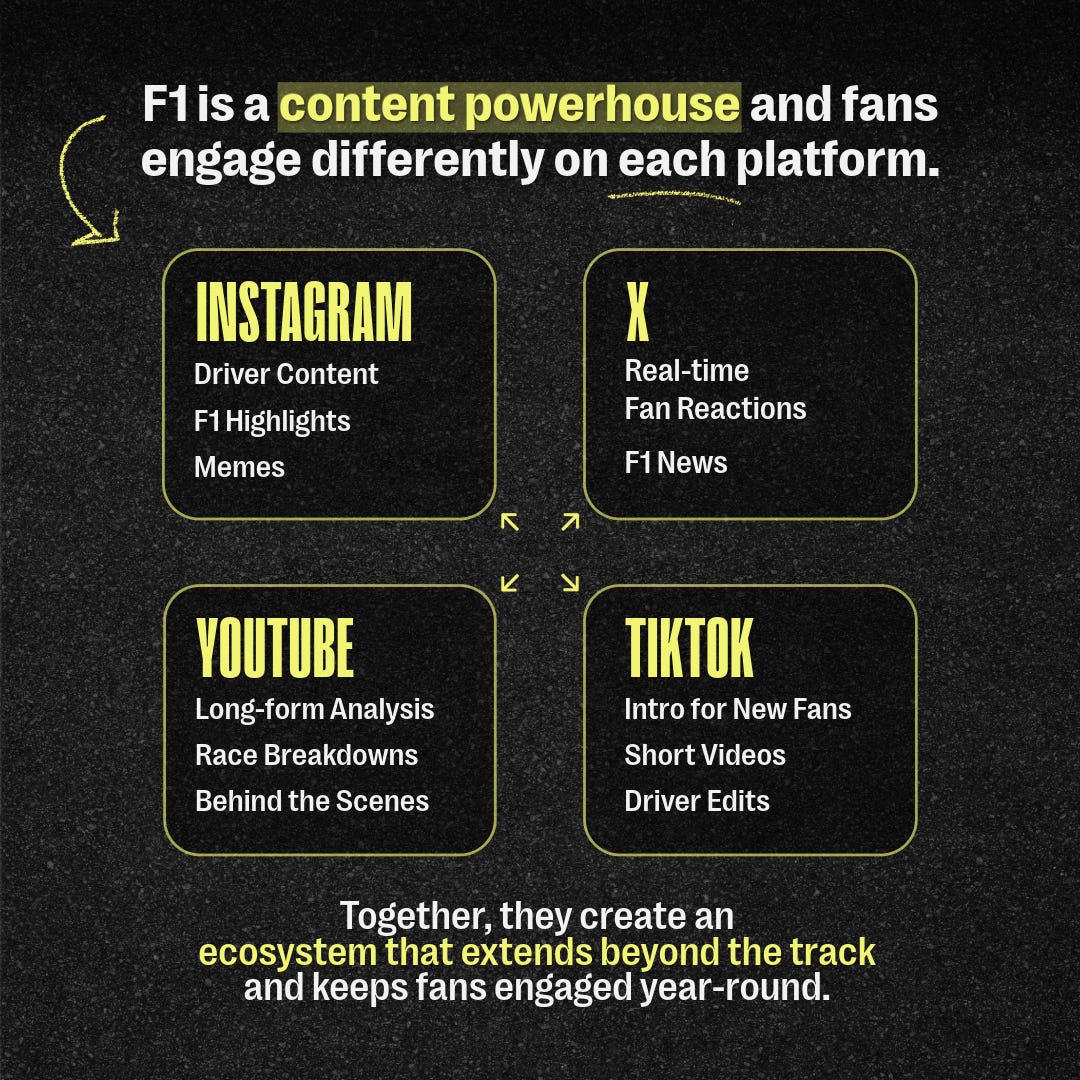
Different platforms tend to serve different purposes. Instagram is where fans engage with highlights, memes, and driver content. TikTok has worked to introduce new fans through short, digestible videos and edits of drivers. X is where fans react to races in real time and discuss news, while YouTube offers longer-form analysis, race breakdowns, and behind-the-scenes content. Each platform contributes something different, but together they create an ecosystem where fans can engage with Formula 1 every day, not just on race weekends.”
F1 has become increasingly mainstream over the past few years. How do longtime fans feel about this? What assumptions do newer fans often get wrong?
“Formula 1 has grown tremendously over the past few years, and longtime fans have mixed feelings about its mainstream success. Many appreciate that the sport is reaching a wider audience, but others feel it has become more of a spectacle than a pure motorsport. There is a greater emphasis on entertainment, celebrity culture, and social media than there was in the past. Drivers have become full-fledged celebrities. As the fan base has grown, parasocial relationships with drivers have also become more common. Fans are more invested than ever in the personalities, friendships, and off-track lives of the drivers, which can sometimes overshadow the racing itself.
One assumption newer fans often get wrong is that you need to understand every technical detail to enjoy Formula 1. While the engineering and strategy are important, many people are initially drawn in by the rivalries, personalities, and storytelling. Over time, they naturally learn more about the technical side of the sport. There are many different ways to be a fan, and not everyone enters the sport with the same level of knowledge.”
Despite a relatively small grid, F1 inspires obsessive fandom. Why do you think that is?
“Despite having a relatively small grid, Formula 1 inspires incredibly passionate fandom because it offers much more than just racing. The sport is built around iconic brands, which represent luxury, performance, and ambition. Fans are drawn to these aspirational brands, as well as to the incredibly talented drivers who race cutting-edge cars and live lifestyles that most people can only imagine.
Formula 1 also shares many characteristics with K-pop and boy band fandoms. I’ve seen people joke about the pipeline from being a fan of a boy band group to becoming an F1 fan because the communities operate in similar ways. Fans pick favorites, follow personalities, celebrate friendships and rivalries, and create a constant stream of online content and discussion.
On top of that, F1 is a content powerhouse. Every constructor is its own brand with a distinct identity, making it easy for fans to find a team to support. The drivers also build their own personal brands through social media by posting vlogs, streaming games, and sharing behind-the-scenes moments. Each constructor has its own social media strategy, so there is always something new for fans to engage with, even when there isn’t a race. That constant stream of content helps deepen fans’ connection to the sport.”
What’s something that brands get wrong about this fandom, or the sport itself?
“One thing brands often get wrong is assuming that Formula 1 is only about the racing. While the on-track action is at the heart of the sport, the fandom has evolved into something much larger. Formula 1 has become a lifestyle, with fans engaging through fashion, beauty, travel, luxury, and pop culture just as much as the races themselves.
As more sports evolve into lifestyle brands, Formula 1 has become one of the strongest examples of that shift. Brands don’t have to limit themselves to race-day activations or sponsorships. There are opportunities to connect with fans through paddock style, beauty trends, wellness, travel, creator partnerships, and the personalities of the drivers.”
How do you think brands can tap into this fandom in ways that feel authentic to the community? What are the non-negotiables?
“Brands can’t think of Formula 1 as just fast cars. Fans are drawn to the sport because of the engineering, race strategy, team dynamics, and the rich history behind every team and driver. Formula 1 is built on rivalries, comeback stories, underdogs, and decades of legacy, so understanding those narratives is essential.
Brands can tap into the fandom by recognizing that fans are deeply invested in the drivers as individuals, not just as athletes. Each driver has a distinct personality and a loyal fan base, so partnerships need to feel authentic and align with who they are. Formula 1 has also evolved into a cultural ecosystem with touchpoints that extend far beyond the track. Fashion, travel, luxury, and lifestyle all play a role in how fans engage with the sport, creating opportunities for brands outside of traditional motorsports categories.
Community is another key part of the fandom. Formula 1 is no longer something fans only follow on race weekends. It’s a year-round conversation fueled by social media, creator content, podcasts, and live events. Brands that embrace this participatory culture through watch parties, fan experiences, interactive content are more likely to build authentic connections with the community. The non-negotiable is authenticity. Formula 1 fans are incredibly engaged and knowledgeable, so brands need to respect the sport, understand its culture, and contribute to the fan experience.”
Subscribe to 360i